Tsarist Eagles figural jewellery box by Kostylo Atelier, featuring a 23-carat gilded brass body, sculptural handle and hand-chased silver-plated double-headed eagle corner reliefs.

Tsarist Eagles – Heraldic Brass Sculpture and Gilding

From Hand-Chased Eagle Reliefs to Architectural Metalwork
Tsarist Eagles explores the relationship between heraldic imagery and sculptural metalwork. The double-headed eagle, historically associated with imperial authority, becomes the defining element of a composition in which the central handle, corner reliefs and architectural brass body form a unified object.

The work was conceived and executed within Kostylo Atelier, combining traditional metalworking techniques with an individual interpretation of heraldic ornament.

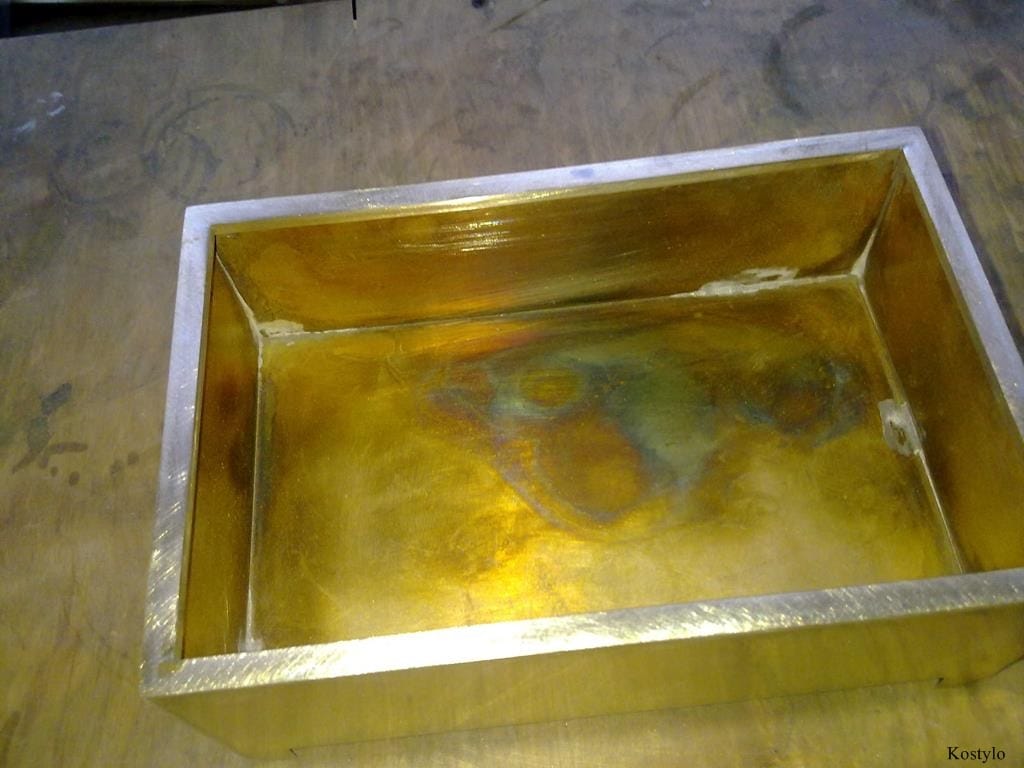
The box was constructed from 3 mm brass sheet, measured, cut and assembled through silver soldering. Once the structure was joined, the internal connections and exterior surfaces were progressively refined by hand. Filing removed excess solder, while successive stages of sanding established the precision of the edges and the continuity of the flat metal surfaces.

Interior of the unfinished Tsarist Eagles brass jewellery box, showing silver-soldered joints, hand-filed edges and surface marks during workshop refinement.
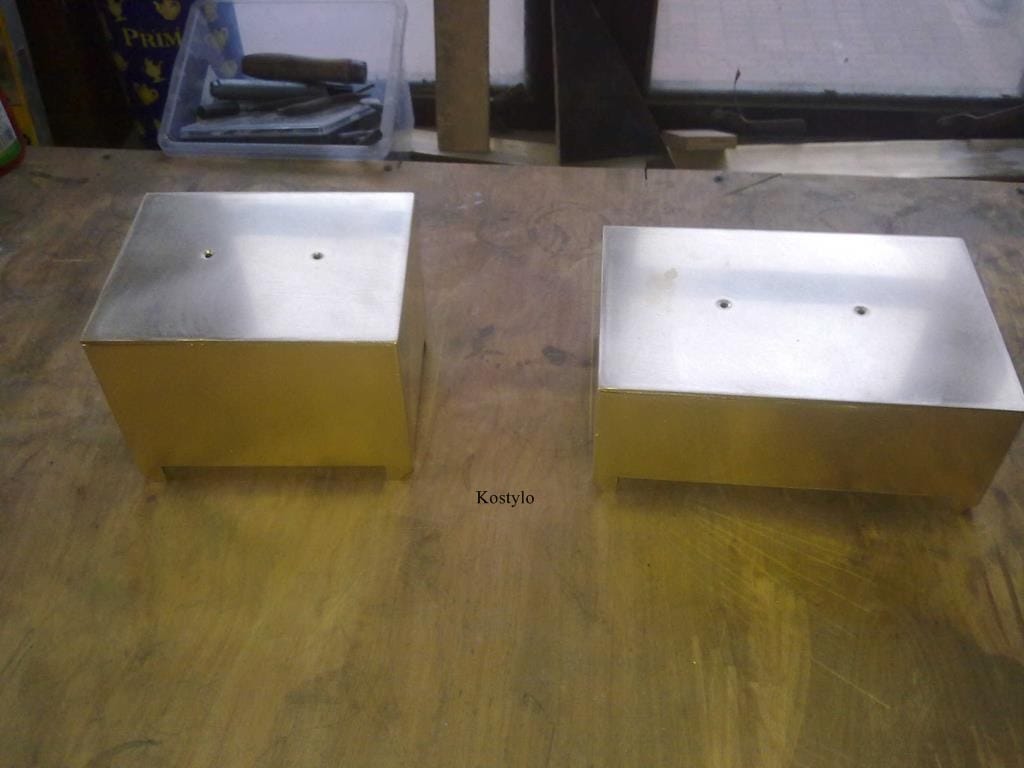
Two unfinished brass components of the Tsarist Eagles jewellery box with hand-smoothed surfaces and drilled mounting holes, photographed on a workshop bench before plating.

Following the initial mechanical refinement, the brass body was copper-plated to provide an intermediate surface for further correction and polishing.

This stage allowed minor irregularities to be addressed before the final decorative finish. The broad, uninterrupted planes of the box required particular attention, as their reflective character would reveal even small imperfections after gilding.
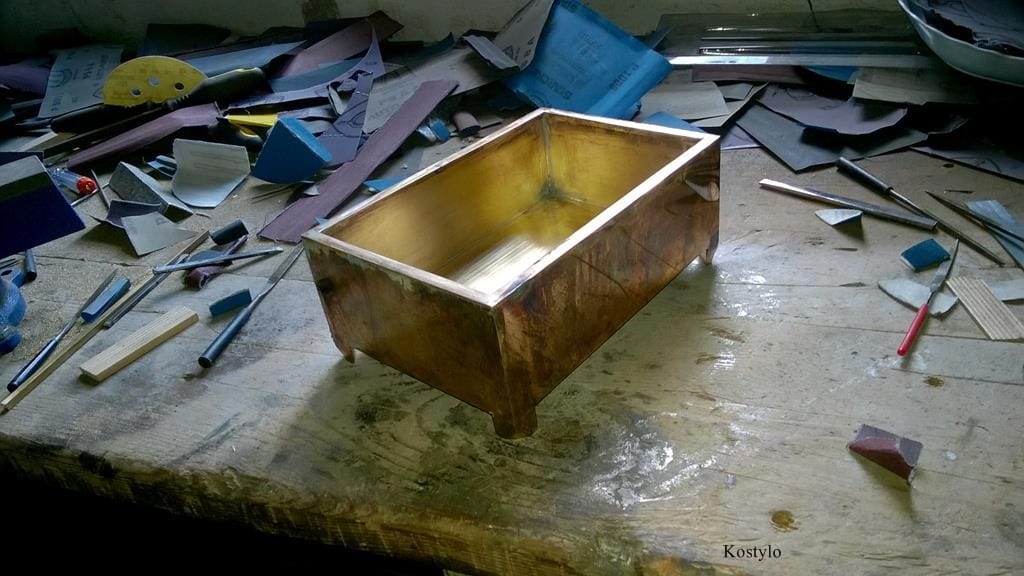
Copper-plated brass body of the Tsarist Eagles jewellery box during manual surface smoothing with abrasive paper, preparing the metal for final polishing and gilding.

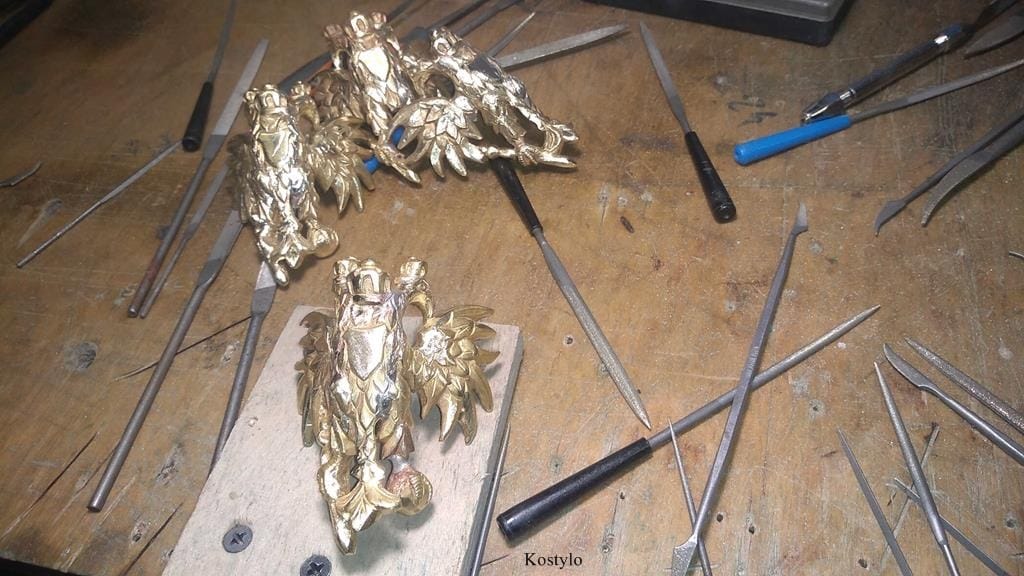
The double-headed eagles were developed as individual sculptural elements rather than applied surface decoration. Cast in brass within the atelier, the figures required extensive hand-finishing to establish the definition of their wings, crowned heads and ornamental details.

Chasing and filing brought precision to the relief surfaces, distinguishing the raised forms from the recessed areas. The completed figures were prepared for silver plating, introducing a deliberate material contrast with the gilded architectural body.

The repetition of the heraldic motif across the handle and corner elements creates a visual relationship between the central sculpture and the surrounding structure.
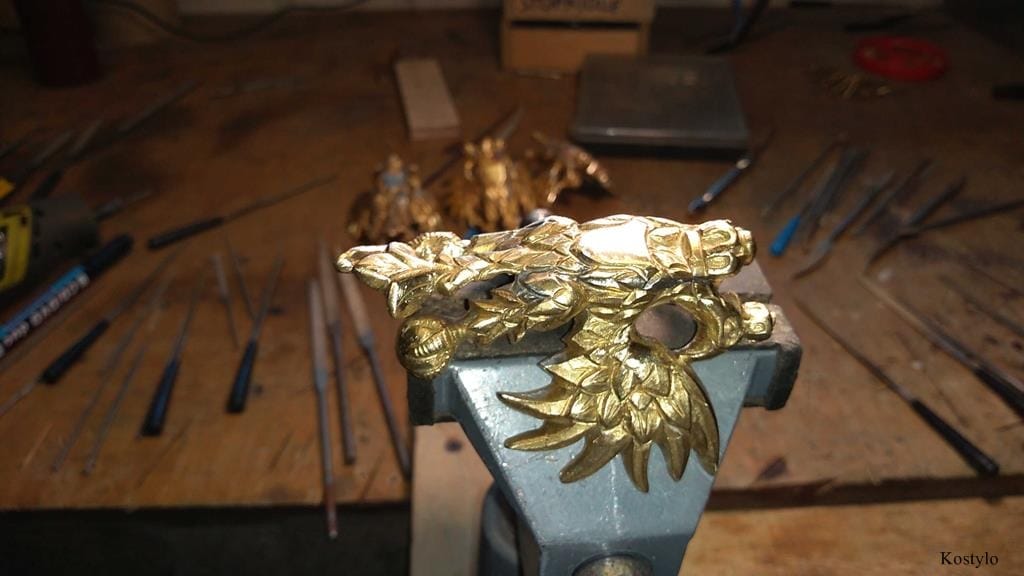
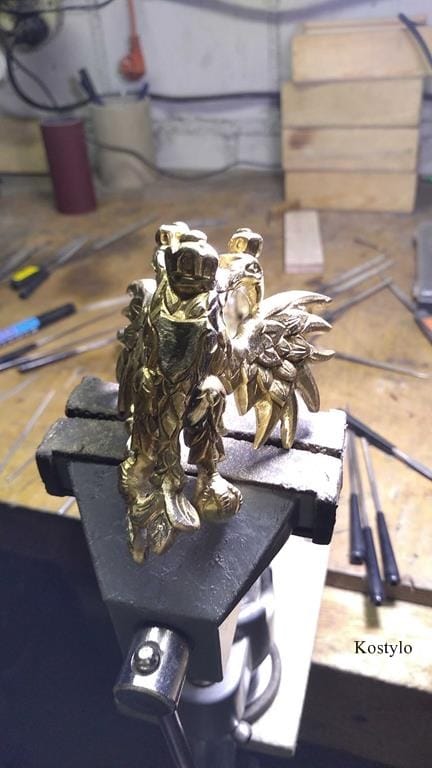
Brass casting of a Tsarist double-headed eagle held in a bench vice during hand chasing and filing, showing the sculpted wings, feathers and heraldic details.
Two cast brass Tsarist double-headed eagle ornaments on a workbench among metalworking files, documenting the manual refinement of sculptural details before silver plating.
Three-dimensional brass corner ornament depicting a Tsarist double-headed eagle, resting on a bench vice to display its hand-ground and filed details after casting and silver soldering.
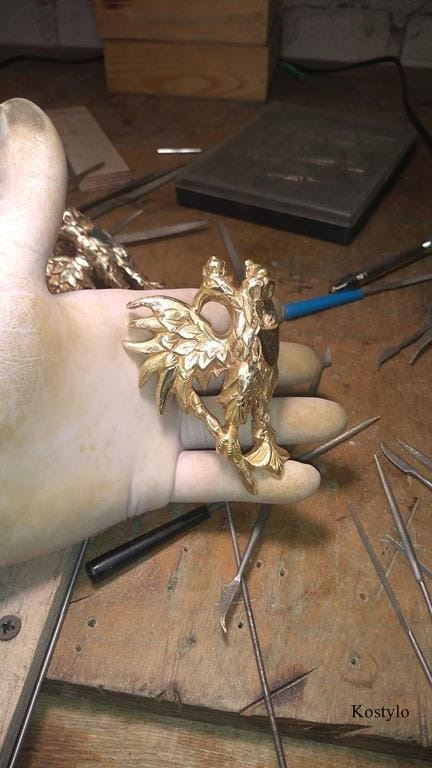
Hand-held three-dimensional brass corner ornament with a sculpted Tsarist double-headed eagle, revealing its angular construction and hand-refined relief details before silver plating.

The positioning of the sculptural elements required a precise relationship between the heraldic figures and the geometry of the box.

Mounting points were measured, drilled and threaded to accommodate the central handle and individual corner reliefs. Their placement was determined not only by the requirements of assembly, but also by symmetry, spacing and the visual balance of the completed composition.

The figures and architectural body could therefore be prepared separately before their final integration.
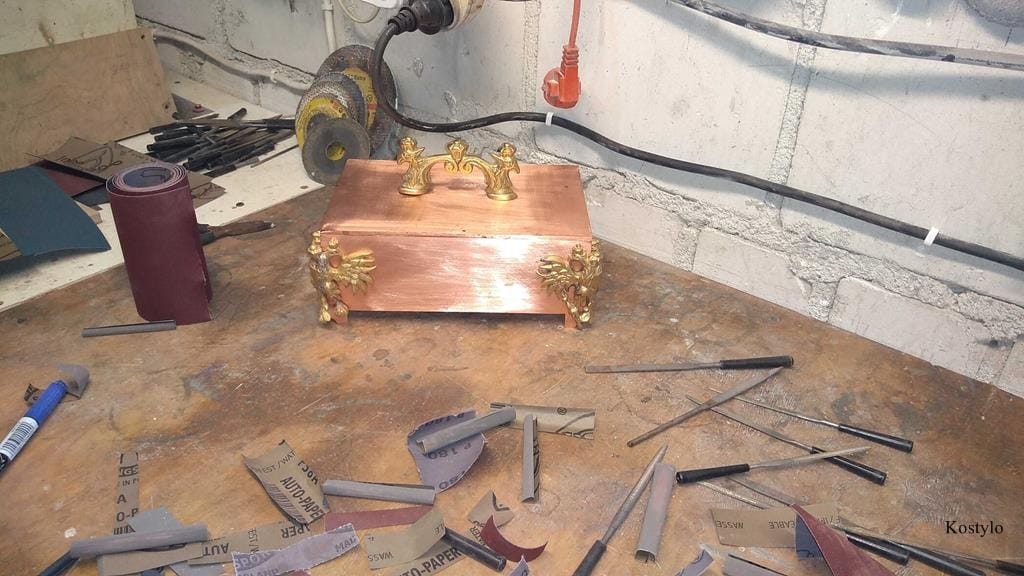
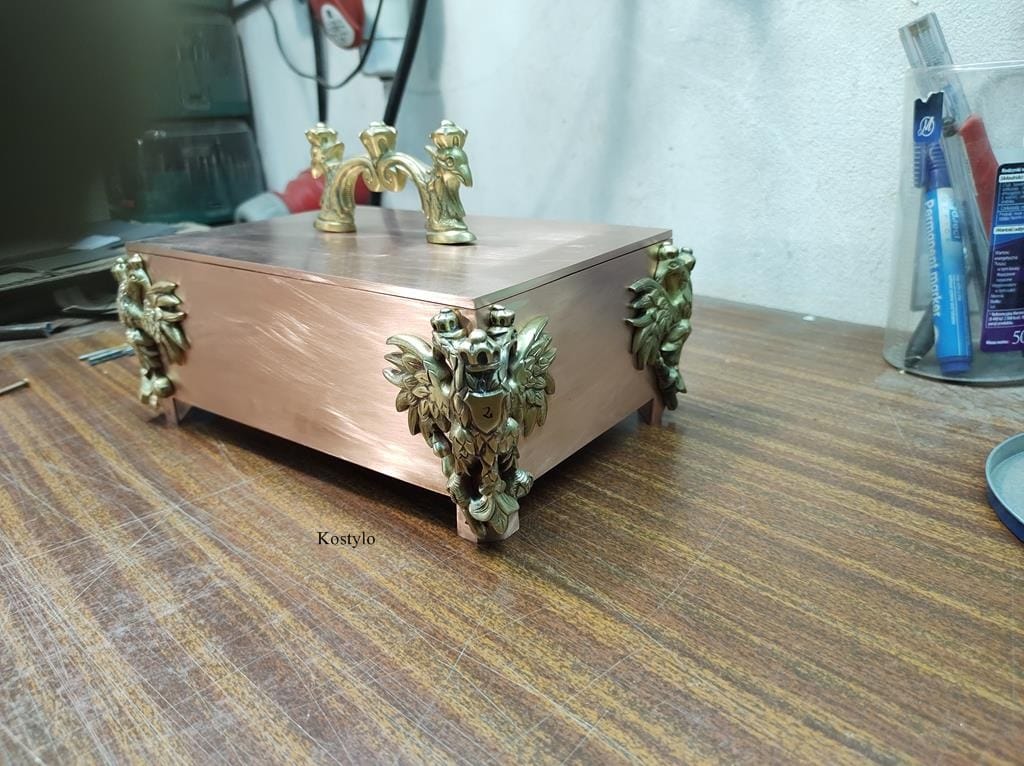
Hand-assembled copper-coated Tsarist jewellery box with mounted double-headed eagle corner ornaments and central handle, shown during manual fitting and surface refinement at Kostylo Atelier.
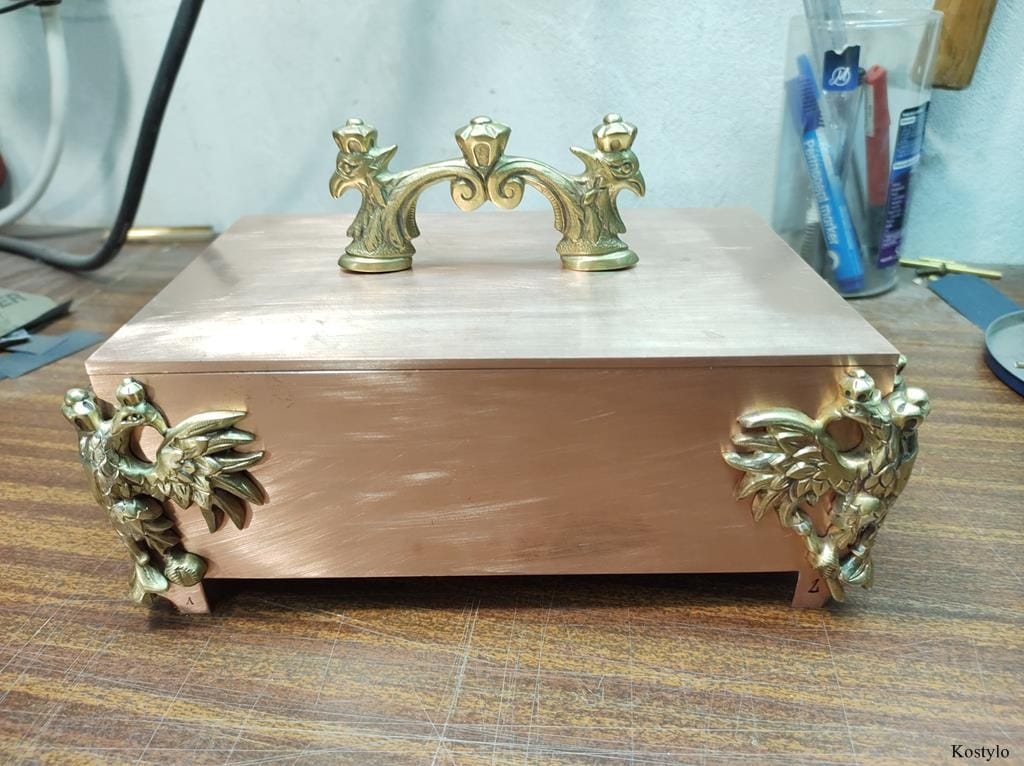
Copper-plated brass Tsarist Eagles jewellery box with mounted double-headed eagle corner reliefs and sculptural handle, showing hand-sanded surfaces before final polishing and gilding.
Front view of the copper-plated Tsarist Eagles brass jewellery box with mounted double-headed eagle corner sculptures and a central heraldic handle, showing hand-sanded surfaces before gilding.

The completed metalwork bears the hand-engraved Kostylo signature. Placed on the underside of the box, the inscription identifies the work while preserving the uninterrupted character of its visible surfaces.

The signature forms part of the object’s physical history, connecting the finished composition with the atelier in which it was created.
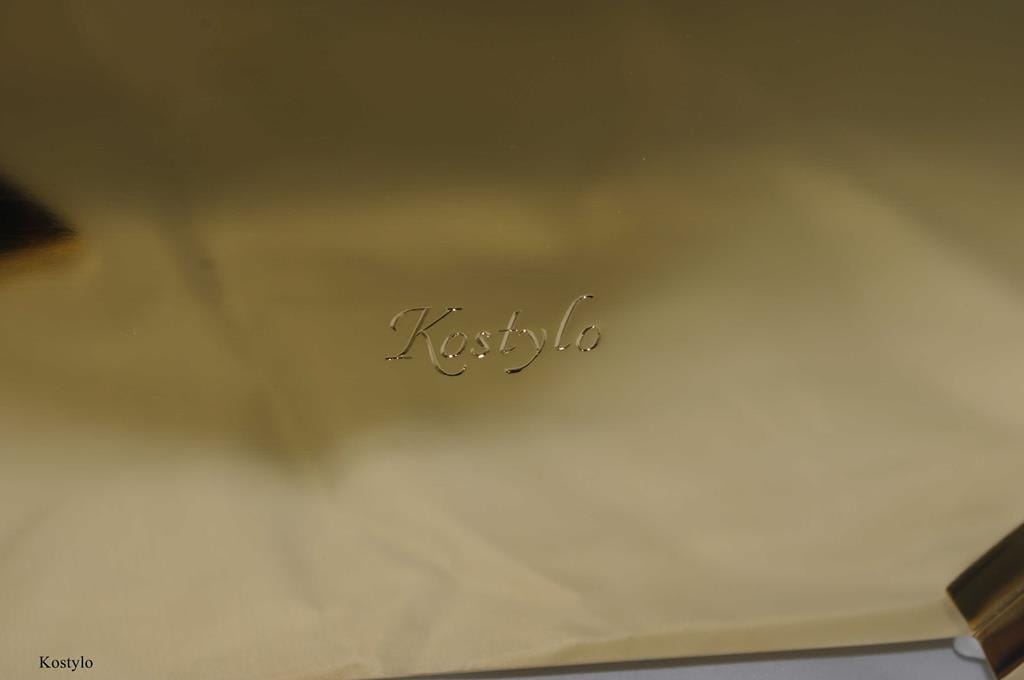
Close-up of the hand-engraved Kostylo logo on the gilded surface of the Tsarist Eagles jewellery box, showing the atelier's signature incised into polished metal.

A separate presentation case was constructed to accompany the finished work. Its dark-green exterior and white satin-lined interior provide a restrained setting for the gilded and silver-plated surfaces.

The case incorporates individually crafted brass hinges and clasps, finished with gilding. These fittings extend the atelier’s attention to material and construction beyond the principal sculptural object.
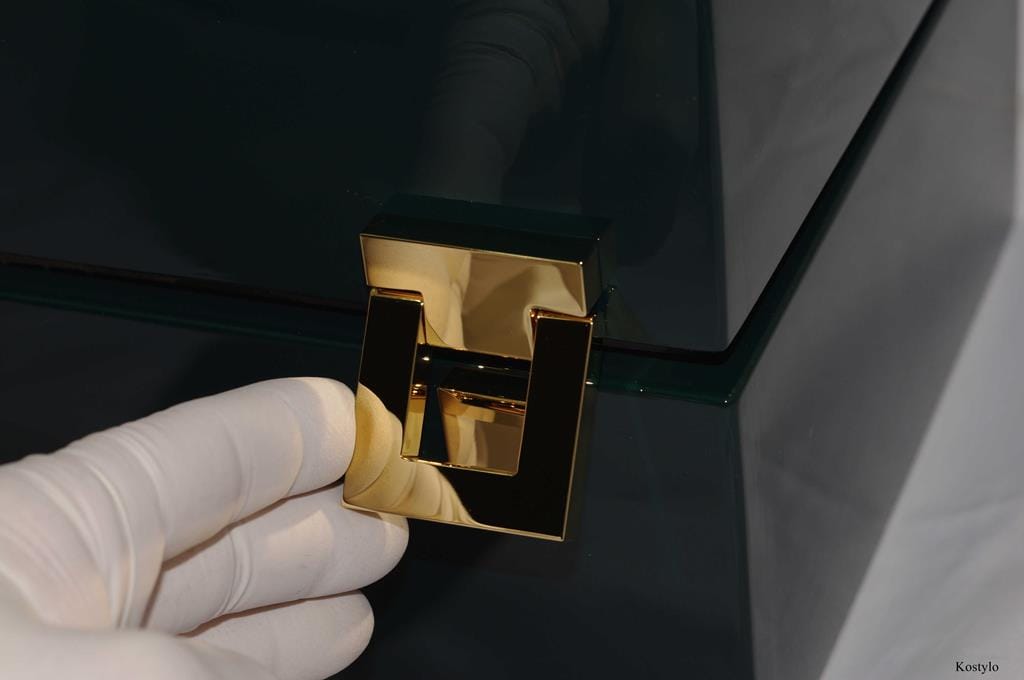
Close-up of a handcrafted gilded brass clasp on the dark-green presentation case for the Tsarist Eagles sculpture, showing its polished surface and mechanical construction.

In its completed form, Tsarist Eagles brings together the symmetry of heraldic sculpture and the measured geometry of a gilded brass structure.

The silver-plated figures establish points of sculptural emphasis against the reflective gold surfaces. Their detailed modelling contrasts with the restrained planes of the box, creating a composition in which ornament and construction remain closely connected.

The work reflects an interest in the transformation of historical symbolism through individual modelling, material decisions and traditional metalworking techniques.
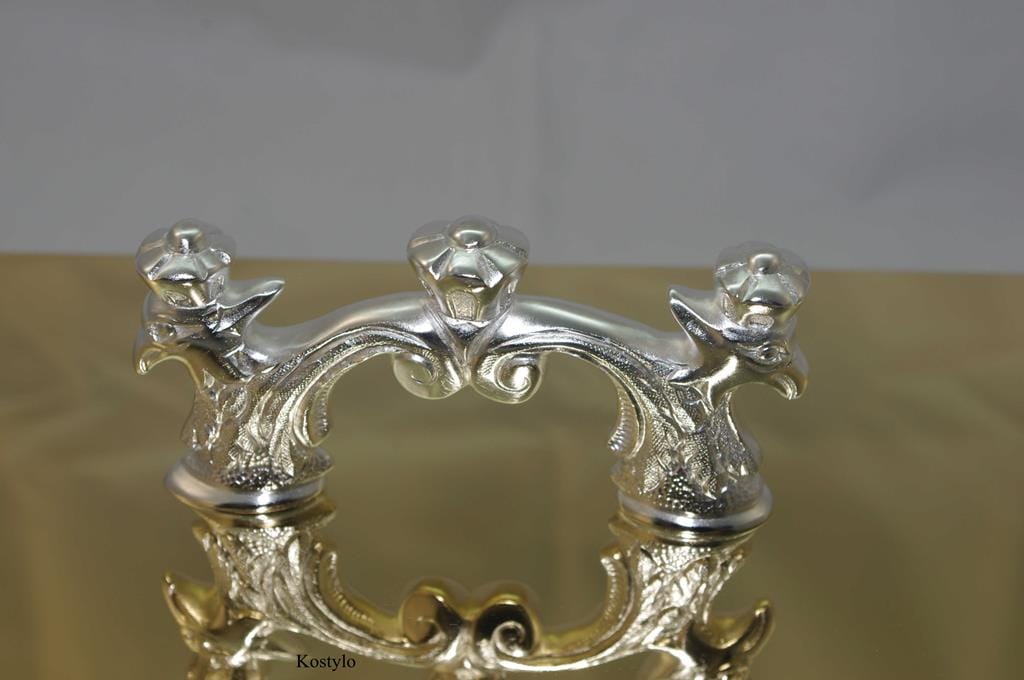
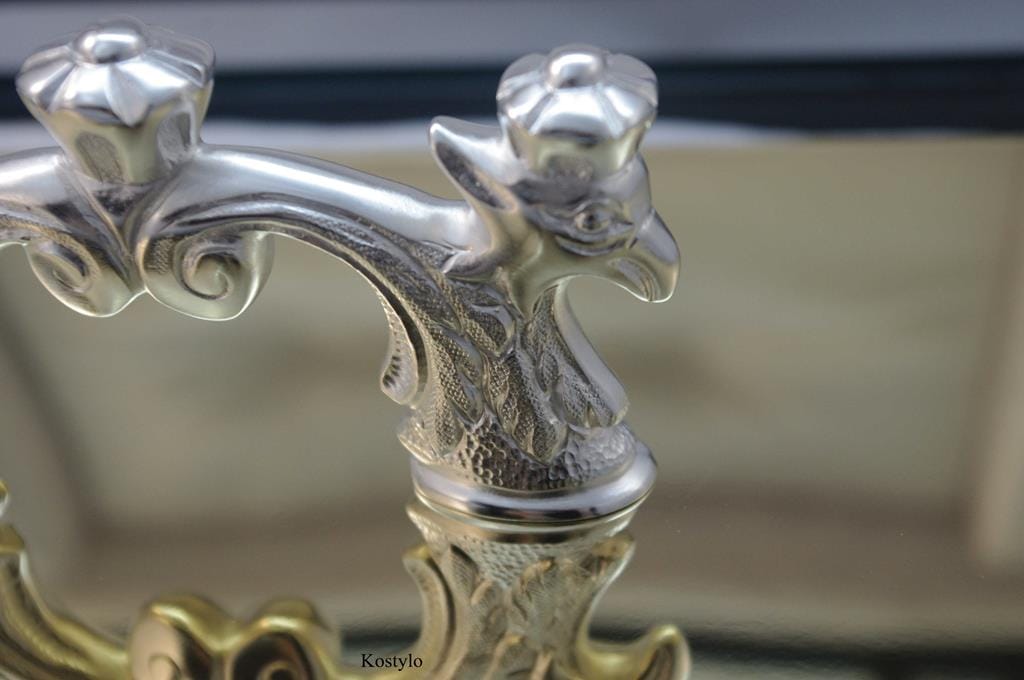
Close-up of the silver-plated sculptural handle of the Tsarist Eagles jewellery box, showing meticulous hand chasing of the crowned eagle heads, feather details and ornamental scrollwork.
Detailed close-up of a hand-chased Tsarist eagle head in silver-plated brass, revealing finely worked feather textures, sculpted facial features and the polished ornamental curves of the handle.
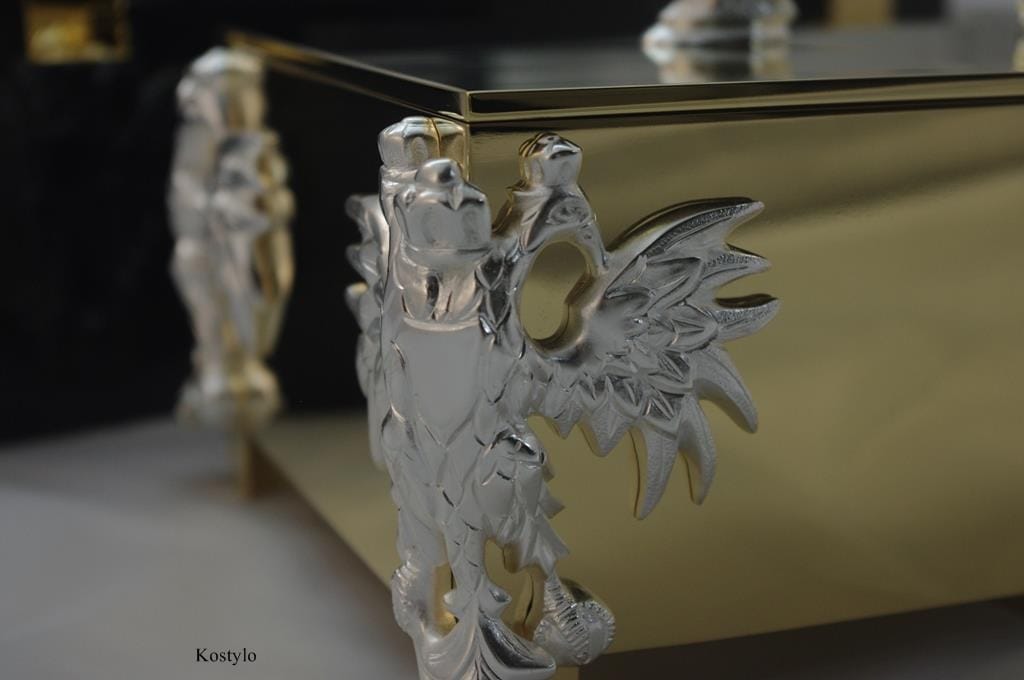
Side view of a hand-chased, silver-plated Tsarist double-headed eagle corner sculpture, revealing the three-dimensional featherwork against the polished 23-carat gilded brass box.
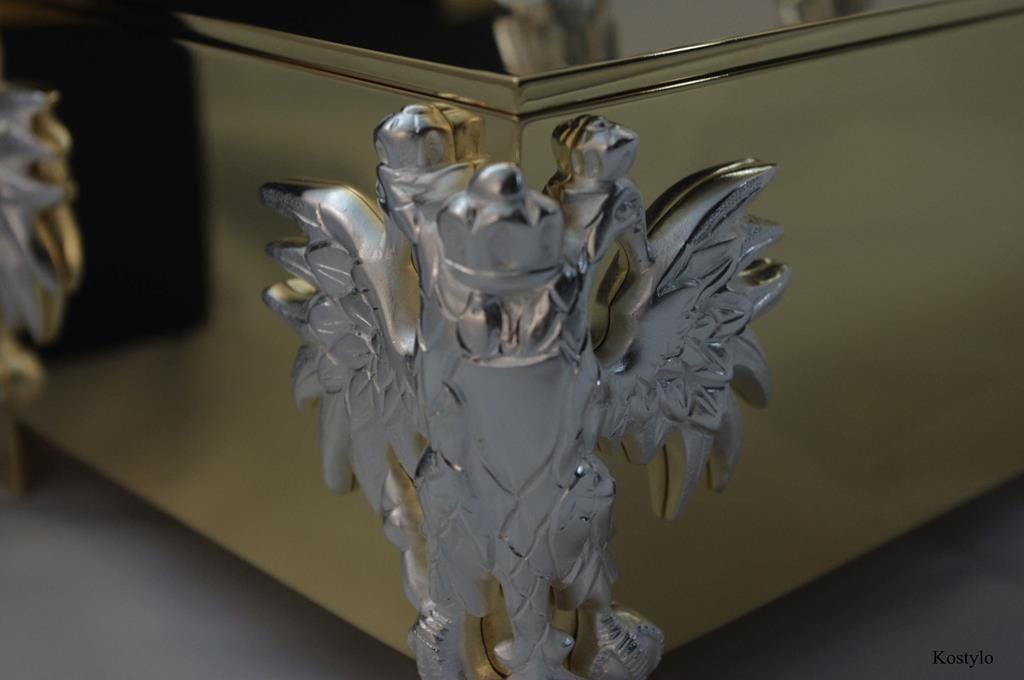
Frontal close-up of a hand-chased, silver-plated Tsarist double-headed eagle ornament embracing the corner of a gilded brass jewellery box, showing detailed wings and sculptural modelling.
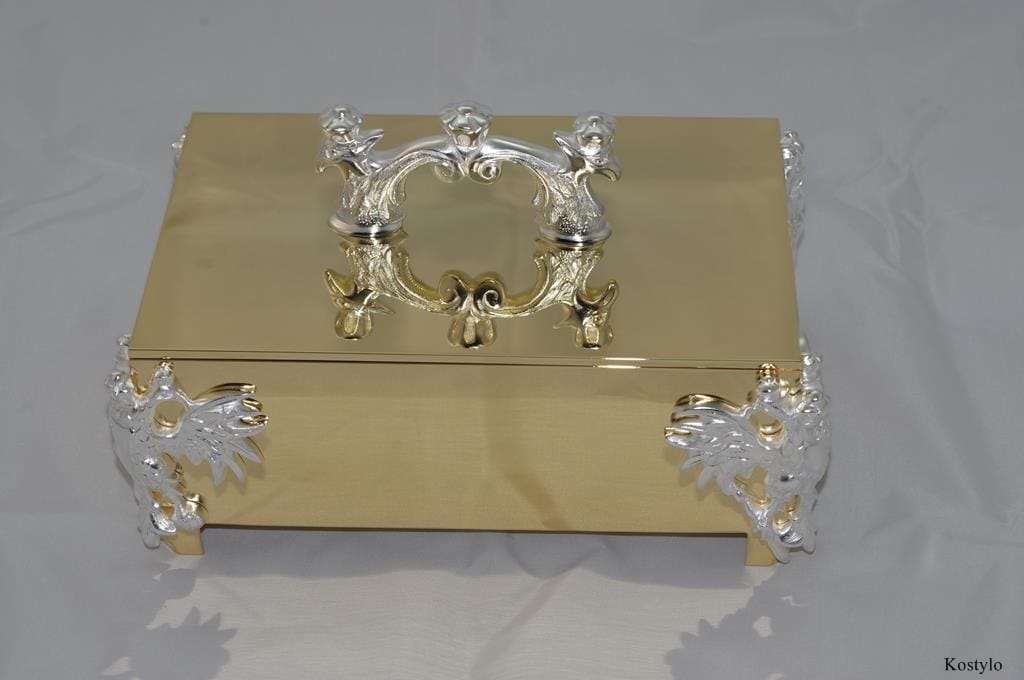
Front view of the completed Tsarist Eagles jewellery box by Kostylo Atelier, with a 23-carat gilded brass body, silver-plated double-headed eagle corner sculptures and an ornate heraldic handle.
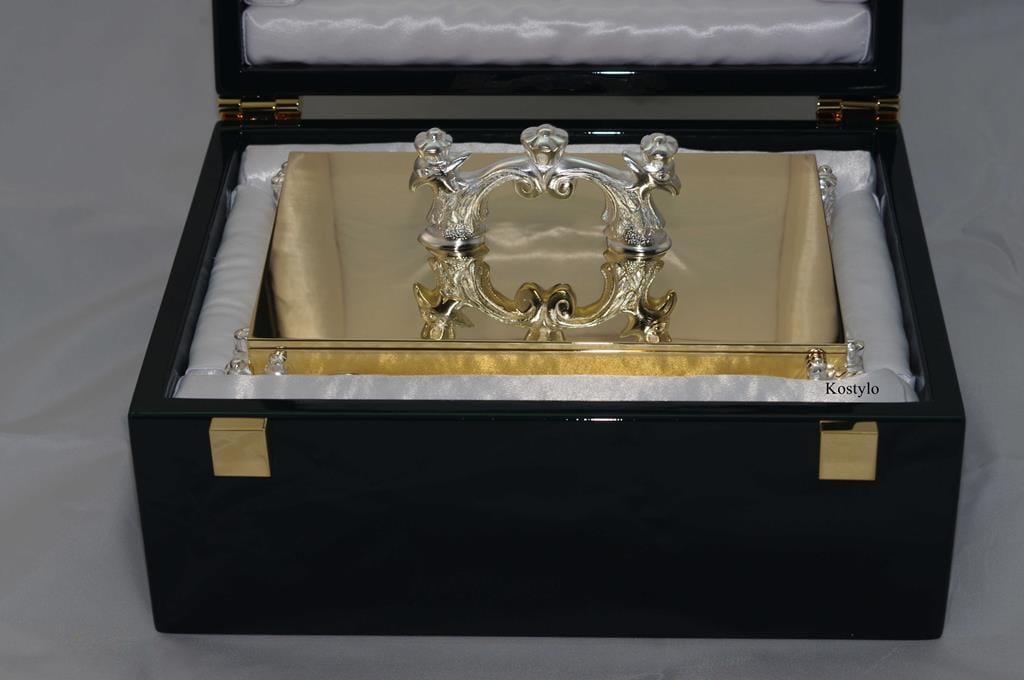
Completed Tsarist Eagles jewellery box in 23-carat gilded brass, displayed in an open dark-green presentation case lined with white satin, with a hand-chased silver-plated eagle handle reflected in the polished lid.

Tsarist Eagles represents an exploration of how inherited visual symbols can acquire a different presence through sculptural interpretation.

The double-headed eagle retains its historical associations, while the act of modelling, chasing and integrating the figures into the brass structure establishes the individual character of the work.